DAGs and Assumptions in Causal Inference
dags-and-assumptions.Rmd🔗 DAGs and Assumptions in Causal Inference
Directed Acyclic Graphs (DAGs) provide a powerful way to encode assumptions about how variables in your system are related.
They help us: - Identify confounders and mediators - Test identification strategies - Derive adjustment sets
🎯 Define a Simple DAG
Let’s say we’re estimating the effect of Treatment on
Outcome, with a confounder X.
dag <- dagitty("dag {
  X -> Treatment
  X -> Outcome
  Treatment -> Outcome
}")

plot(dag)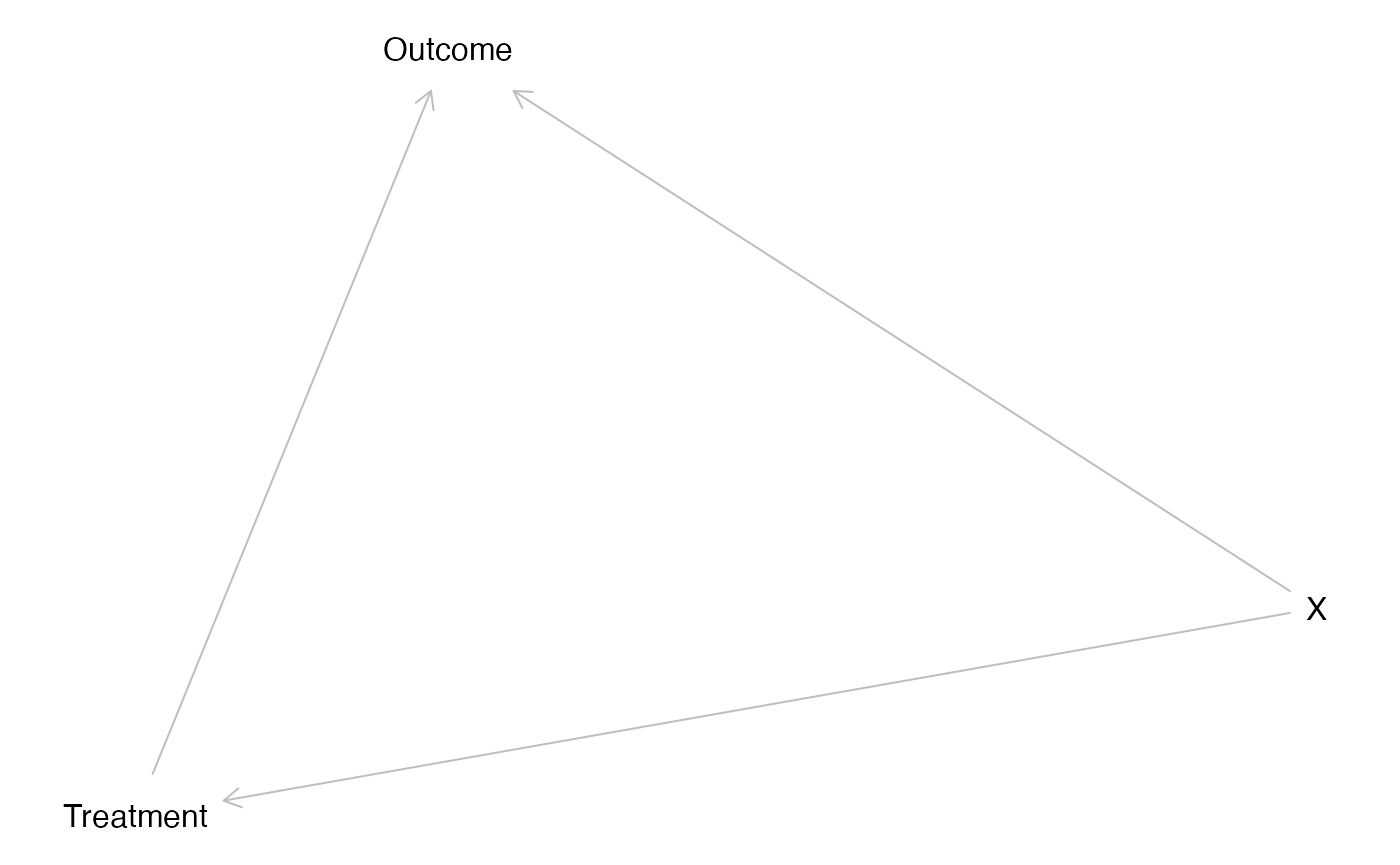
📚 Adjustment Sets
Which variables do we need to control for to identify the causal
effect of Treatment on Outcome?
adjustmentSets(dag, exposure = "Treatment", outcome = "Outcome")## { X }This shows that adjusting for X is sufficient.
🧠 More Complex DAG
complex_dag <- dagitty("dag {
  Age -> Treatment
  Income -> Treatment
  Age -> Outcome
  Income -> Outcome
  Treatment -> Behavior -> Outcome
  unobserved1 [unobserved]
  unobserved1 -> Income
  unobserved1 -> Outcome
}")

ggdag::ggdag(complex_dag, layout = "circle")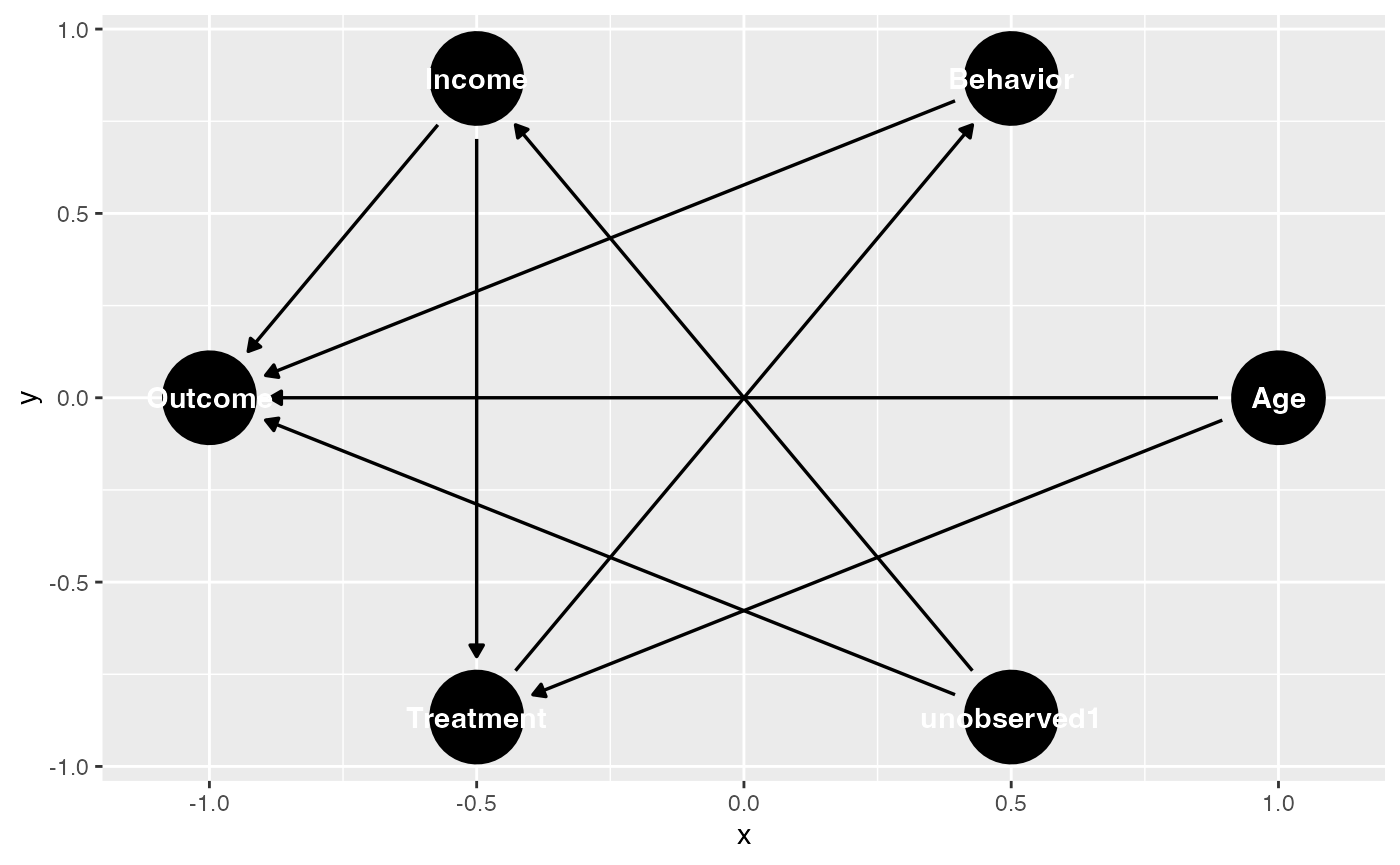
ggtitle("DAG with Confounding and Mediation")## $title
## [1] "DAG with Confounding and Mediation"
##
## attr(,"class")
## [1] "labels"